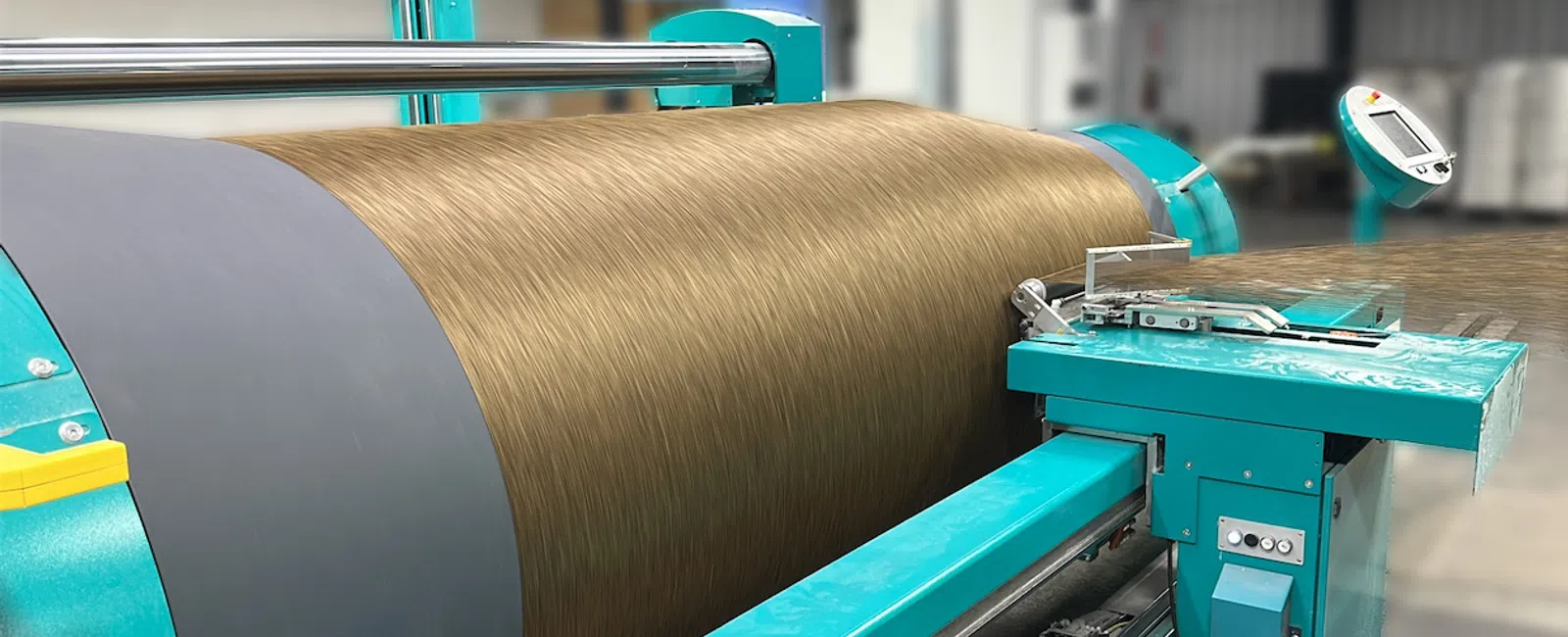
Summary:
Sectional warping is the warp preparation method for industrial yarns at risk of damage in the direct warping process. Although a more labor intensive and costly process than direct warping, sectional warping has its advantages in creating a more durable final product for specific applications. This article explains how the process works, when an application requires it, and why the choice of mill matters as much as the choice of method.
Key Takeaways:
- The warp preparation method is a specification decision that determines whether expensive yarn arrives at the loom intact or as material waste.
- Sectional warping is the warp preparation that protects aramid, polytetrafluoroethylene, carbon fiber, ceramic, quartz, mixed-fiber, and specialty-finished yarns from breakage and waste.
- When sectional warping is in-house at the weaving mill, decisions about tension, section width, ends per section, and yarn placement are adjusted by the engineering team that designed the construction.
Some industrial yarns arrive by the kilo, not the bale. Each one carries a cost per pound that makes yarn breakage during warp preparation a material expense, not a rounding error.
Examples of these industrial yarns include:
- Aramid filaments
- Polytetrafluoroethylene (PTFE) yarn
- Carbon fiber tow
- Ceramic and quartz fibers
Sectional warping is how custom textile mills prepare these yarns for the loom. Although sectional warping is slower and more labor-intensive than direct warping, it is the only process that produces a beam without wasting material or breaking yarns that cannot afford to be broken.
The Sectional Warping Process for Quality
Sectional warping is a two-stage warp preparation method designed for fabric runs where yarn handling requires more control than a direct warper can deliver.
Direct warping pulls all warp ends simultaneously from a creel of yarn packages and winds them onto the weaving beam in one continuous pass. Sectional warping does this in two stages.
The two-stage process works like this:
- A subset of the total warp ends is pulled from the creel and wound onto a sectional warping drum in a narrow band
- The drum rotates while moving laterally, building the section against a tapered surface
- When the section reaches the target length, the yarn is cut and the next section is wound alongside the first
- This continues until the full width of the warp is built up on the drum, section by section
- In the second stage, every section is transferred from the drum to the weaving beam in a single coordinated unwinding
When Does an Application Require Sectional Warping?
Five conditions on the application side point to sectional warping rather than direct warping:
- Yarn cost - When yarn pricing makes breakage and waste financially significant, sectional warping's per-section tension control reduces yarn loss across the warp preparation stage.
- Yarn fragility - Brittle fibers with low elongation cannot tolerate the higher tension loads of direct warping. Sectional warping handles each section at its own tension setting, which prevents the filament damage direct warping would cause.
- Batch size - Production runs below a few thousand yards rarely justify the setup cost of a direct warper. Sectional warping is sized for short and mid-length runs, which fits prototype and small-batch industrial work.
- Pattern complexity - Multi-color, multi-fiber, or pattern-repeat fabrics require precise yarn-end placement that sectional warping can provide. Sectional warping handles section by section rather than across hundreds of ends simultaneously.
- Mixed-yarn constructions - Hybrid fabrics combining two or more fiber types in a single weave require yarn placement controls that sectional warping provides natively.
If one or more of these conditions applies to a project, sectional warping is the recommended warp preparation method.
How Does Sectional Warping Differ from Direct Warping?
The two methods are built for different production scales and different yarn types. The choice between the two is rarely about preference, but whether the application can tolerate direct warping's trade-offs or whether sectional warping's tighter control is required.
Direct Warping Characteristics:
- High-volume throughput
- All warp ends pulled simultaneously from a large creel
- Single-pass beam preparation
- Lower cost per yard at scale
- Uniform tension across hundreds of ends
- Best for standard-yarn fabrics in long production runs
Sectional Warping Characteristics:
- Lower-volume throughput
- Warp ends wound in sections onto a drum, one section at a time
- Two-stage preparation (drum, then beam)
- Higher labor cost per yard but lower yarn waste
- Per-section tension control
- Best for high-value, fragile, mixed, or pattern-specific yarns
Which Yarns Demand Sectional Warping Treatment?
The yarns that demand sectional warping share one trait: they cannot tolerate the trade-offs that make direct warping economical. Six yarn categories typically require sectional warping rather than direct warping:
- Aramid yarns, such as Kevlar, Nomex, and Technora, are expensive but provide ultra-high tenacity. Sectional warping's per-section tension control protects yarn integrity through warp preparation. Direct warping tension can break or fatigue aramid filaments.
- PTFE yarn filament has a slippery surface and limited tensile recovery. It does not handle the friction and tension of high-speed direct warping well. Sectional warping at lower speeds preserves yarn properties.
- Carbon fiber tow is brittle, abrasive against itself and equipment, and prohibitively expensive to waste. Sectional warping is the standard preparation method for carbon-reinforced woven composites.
- Ceramic and quartz fibers are used in high-temperature filtration, aerospace thermal protection, and specialty insulation. Both fibers are extremely brittle. Direct warping is not a viable option.
- Mixed-fiber warps with hybrid constructions combine aramid with PTFE, polyester with carbon, or any other multi-fiber combination require yarn-end placement that sectional warping provides.
- Specialty dyed or finished yarns that require color matching and finish consistency across a production run are harder when warp ends are broken or replaced mid-process. Sectional warping reduces both.
Why Does the Mill Choice Matter for Sectional-Warped Fabric?
Not every textile mill operates a sectional warper. The equipment is more specialized, the operator skill required is higher, and the production runs are smaller, which means the economics rarely work for high-volume commodity mills.
When sectional warping is contracted out before the fabric reaches the loom, the decisions about tension, section width, ends per section, and yarn placement get separated from the engineering team that designed the construction. The mill weaving the fabric inherits whatever the contract warper produced.
Mills that handle sectional warping in-house keep these decisions on the production floor:
- Tension settings tuned to the specific yarn and weave
- Section width matched to the loom configuration
- Ends per section adjusted for the warp count and density
- Yarn placement coordinated with the weave pattern
At Southern Industrial Fabrics, sectional warping is performed in-house at our Rossville, Georgia facility on the same floor as the looms that weave the resulting fabric. The engineer who designed the construction can adjust the warp preparation in real time. A 50-yard prototype run benefits from the same operator and equipment as a 5,000-yard production order.
Most large textile mills will not take a sectional-warped order under 500 yards. We will, because the engineering value of the process does not depend on volume. It depends on the yarn handling the application requires.
If you are sourcing a fabric that calls for aramid, polytetrafluoroethylene, carbon, ceramic, quartz, or any mixed-fiber construction, the warp preparation method is likely part of the specification and definitely part of the SIF-engineered approach to quality textile solutions.
Frequently Asked Questions
What is sectional warping in textile manufacturing?
Sectional warping is a two-stage warp preparation process that winds yarns onto a sectional drum in sections, then transfers the full warp to the weaving beam in a single coordinated step. It is used for high-value, fragile, or mixed yarns and for production runs that benefit from per-section tension control rather than the uniform high-volume tension of direct warping.
What is the difference between sectional and direct warping?
Direct warping pulls all warp ends from a creel onto the weaving beam in one continuous pass, optimized for high-volume production of standard-yarn fabrics. Sectional warping winds yarns in sections onto a drum first, then transfers them to the beam, providing per-section tension control suited to expensive, brittle, or mixed yarns at lower production volumes.
What yarns require sectional warping?
Aramid (Kevlar, Nomex, Technora), polytetrafluoroethylene (PTFE), carbon fiber tow, ceramic and quartz fibers, and mixed-fiber warp constructions typically require sectional warping. These yarns share characteristics like high cost, low elongation, brittleness, or precise placement requirements that direct warping cannot accommodate without breakage or waste.
When should you use sectional warping instead of direct warping?
Sectional warping is the right choice when the yarn is expensive enough that breakage matters financially, when the fiber is too fragile for direct warping tensions, when the production run is small to mid-volume, when the warp combines multiple fibers, or when the pattern requires precise yarn-end placement.
Is sectional warping more expensive than direct warping?
Sectional warping has a higher labor cost per yard of beam preparation than direct warping. For high-volume standard-yarn fabrics, that cost difference makes direct warping the better economic choice. For high-value or specialty yarns where direct warping would cause material loss, sectional warping is typically less expensive once yarn waste is included in the total cost.
What is a sectional warp beam?
A sectional warp beam is the cylinder onto which the prepared warp is transferred from the sectional warping drum before weaving. It holds all the warp yarns in their final arrangement and tension before the beam is loaded onto the loom.
Who provides sectional warping in manufacturing?
Southern Industrial Fabrics stands out as one of the few custom fabric manufacturers in North America utilizing sectional warping technology. This advanced process plays a crucial role in producing superior woven textiles