Summary: A woven base fabric carries the
strength of a coated product, and a coating follows the surface it lands on.
Weave openness, yarn type, stability on the line, and weight and width
tolerances decide whether the coating bonds and runs clean. Southern Industrial
Fabrics helps guide weave choice and coating specifications to keep the fabric
on target at every step of construction and finishing.
Key Takeaways
● The woven base supplies the
strength and the coating supplies the surface properties. A thin spot or a
wandering edge in the woven base shows up in the coated product.
● Weave openness offers a
tradeoff for coating. An open weave
gives a coating something to grip but raises the risk of strike-through and
distortion. A tight weave resists strike-through and distortion but offers less
to grip.
● Provide the mill the finished
weight and the coating method. The base weight follows from those two numbers
and the coater's limits.
A coated fabric is two products working as one. The
coating gets the credit for water resistance and surface finish. The base
fabric does the structural work. When a coated roll misbehaves, the cause can
trace back to a base-fabric property that was never written into the
specification.
There are guidelines on how bases and coatings
generally behave, these do not always tell the full picture of how a finished
roll will perform. Southern Industrial Fabrics carries the work from yarn
sourcing through the finished roll that ships. The yarn is selected and bought
for the construction. The fabric is woven on SIF looms in Rossville. The
coating decisions after weaving belong to SIF as well. Our domestic coating
partners are experienced in how a specific weave base and coating work
together.
The coating will not correct
structural flaws in the woven base
Strength and dimensional stability come from the yarns
and the way they interlace. The coating adds a surface layer on top of that
foundation, such as water resistance or abrasion resistance. It adheres to the
yarn and weave construction that is present and can not make up for structural
weakness in the base fabric weave.
A light spot in the weave or an edge that wanders from
roll to roll can carry through to the coated product instead of disappearing
under the film. The fabric coating can smooth minor surface irregularities, but
a structural flaw in the base remains a structural flaw.
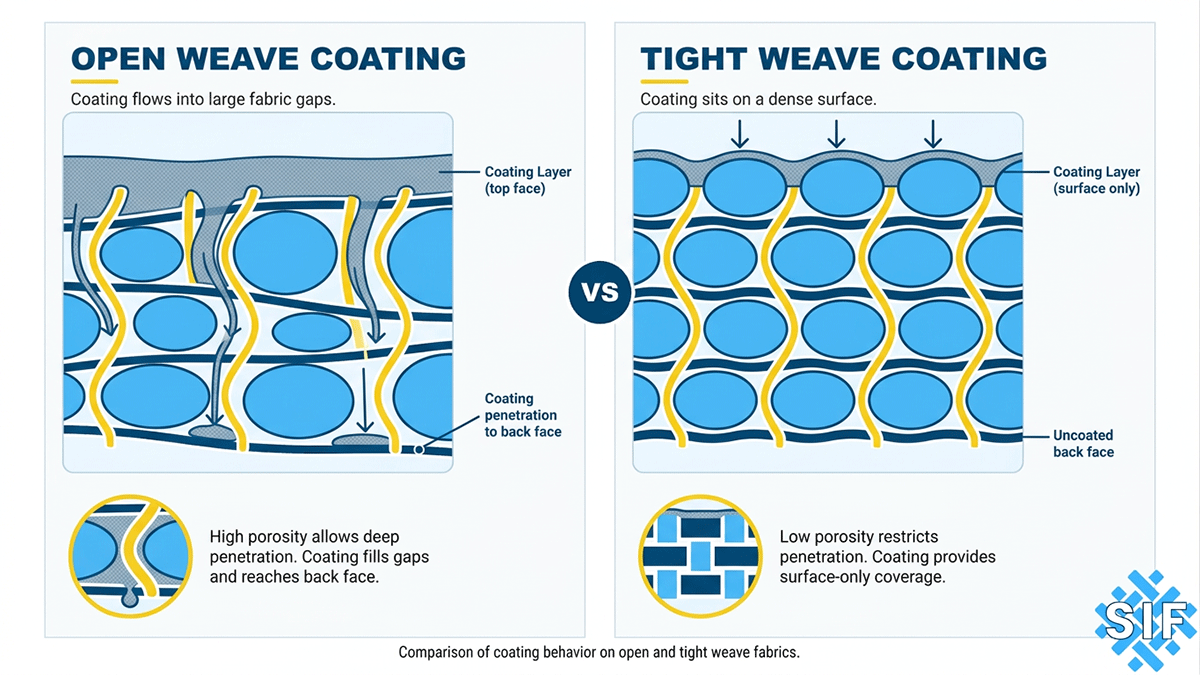
Open or Tight, Which Weave Suits the
Coating?
An open weave leaves gaps between the yarns. The
coating can flow into those gaps and around the yarn bundles, and that
penetration gives the coating a beneficial mechanical grip. However, that same
openness can let coating pass through to the back of the fabric, a defect
called strike-through. An open structure can also shift and pucker as it passes
over rollers and under a knife.
A tight weave resists strike-through and stays flatter
and more stable under tension. The tradeoff is less grip. A very tight cloth
gives the coating small gaps to enter, so adhesion depends more on the yarn
surface and any pretreatment than on mechanical anchoring.
A barrier specification that says only "tight weave"
can starve the coating of grip, and a grip specification that says only "open
weave" can invite strike-through.
The desired end result is where specifications are
born. How does the fabric need to perform? This is the starting point to decide
weave and coating pairings.
● A barrier on one face favors
a tighter structure, or a construction that limits strike-through.
● Saturation or a strong
mechanical grip favors a more open structure, run with a coating process set to
work the coating into the yarns without filling the openings.
● Lamination changes the
picture. A laminate bonds a separately made film to the base, so the film sits
on the surface and strike-through matters less. Surface flatness and the bond
to the yarn surface matter more.
● Weave construction names give
a rough guide on what direction to go. Yarn size and thread count change can
also greatly influence which weave is ideal. For example, Leno sits at the open
end, and a leno open weave construction holds its openings under tension. Duck,
drill, and twill usually sit toward the dense end. Ripstop adds tear resistance
with reinforcing yarns.
The knowledgeable team at SIF can help navigate all the intricacies of choosing the details to ensure your custom fabric performs.
Yarn and Fiber Decide How the Coating
Bonds
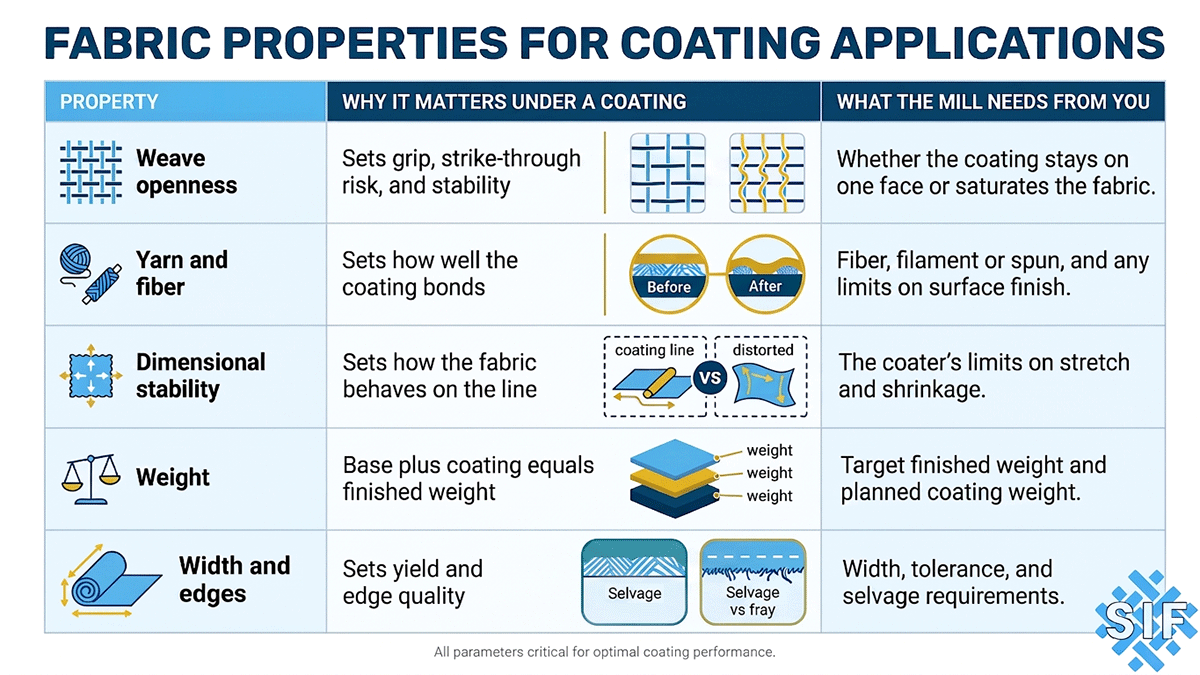
Yarn type changes how a coating bonds. Smooth
continuous-filament yarns make a clean, strong base, and they bond less
readily. Spun yarns carry surface fibers that give a coating something to hold.
A finish left on the yarn can interfere with adhesion, so the finishing step
before coating belongs in the plan.
Fiber choice matters for the same reason. Polyester and nylon are common bases for coated goods, and aramid shows up under coatings that need heat or cut resistance. Fibers with low surface energy, polypropylene among them, are often harder to bond to and may need a treated surface. The fiber has to suit the coating and the end use together.
What Happens to the Base on a Coating
Line?
A coating line pulls fabric under tension across
rollers, under a knife or through a bath, and often through an oven. A base
that stretches or shrinks under those conditions distorts the coated product.
Loosely held yarns slide apart and pucker.
SIF runs sectional warping on site in Rossville,
across multiple shifts. Preparing the warp in sections, with tension controlled
per section, is one way a mill works toward consistent tension across the full
width to prepare for coating.
At Southern Industrial Fabrics, finishing steps go through our domestic partners. We help our customers navigate decisions pertaining to limits on stretch, shrinkage, and width change, and work to ensure the coating follows the strict standard.
Weight and Width Tolerances Decide
Yield
The base weight plus the coating weight equals the
finished weight. Take a 12 ounce per square yard finished target and a planned
coating weight of 4 ounces per square yard. The base weight to request is 8
ounces per square yard.
Base weight that varies along a roll moves the coating
weight and the finished weight with it. Width matters for the same reason. A
narrow edge or a wandering selvage leaves unusable coated fabric at the edges
and lowers the yield from the roll. Our team can help set weight and width
targets with tolerances to ensure the desired finished fabric.
Matching a Base Fabric
Southern Industrial Fabrics weaves base fabrics in Rossville, Georgia, from 45 to 92 inches wide and from 2 to 30 ounces per square yard. Dyeing, finishing, and coating go to our domestic partners. Tell us the finished weight, the width, and the coating method. Our team will help you find the right weave and handle the manufacturing end-to-end.
Frequently Asked Questions (FAQ)
What is a base fabric in a coated
fabric?
The base
fabric is the textile that a coating is applied to. The base supplies the
strength and dimensional stability of the finished product, while the coating
adds surface properties such as water resistance. Because the coating follows
the base, defects in the base carry through to the coated roll.
What is the difference between coated
and laminated fabric?
Coating
spreads a polymer layer directly onto the base fabric, either on the surface or
saturated into the structure. Lamination bonds a separately made film or layer
to the fabric with adhesive or with heat and pressure. Both start with a base
fabric, so the base requirements for strength, stability, and uniform weight
apply to either process.
What fabric is used as the base for
coated fabrics?
Woven
polyester and nylon are common choices, with aramid, cotton, and other fibers
used where the application calls for them. Woven constructions are often
selected when strength and dimensional stability matter. The right base depends
on the end use, the coating method, and what the coating line can tolerate.
How do base fabric needs change for
lamination?
A laminate
bonds a pre-made film to the surface, so strike-through is less of a concern
than in coating. Surface flatness, the bond between film and yarn surface, and
uniform weight carry more of the load.
Does a tighter weave make a better
base for coating?
Not
automatically. A tight weave resists strike-through and stays stable, but it
gives the coating small gaps to grip, so adhesion relies more on the yarn
surface or pretreatment. An open weave lets the coating anchor mechanically,
with more risk of strike-through and distortion. The better base is the one
matched to whether the coating must stay on one face or saturate the structure.
How does base fabric weight affect a
coated product?
The finished
weight equals the base weight plus the coating weight. Subtract the planned
coating weight from the finished-weight target to find the base weight. Weight
that varies along a roll changes the coating weight and the finished weight
with it. Weight should be specified as a target with a tolerance.
Can a coating hide defects in the
base fabric?
Rarely. A
coating can smooth minor surface irregularities, but structural flaws such as
thin spots or wandering edges tend to carry through to the coated product.
Specifying and inspecting the base fabric before it goes to the coater is
easier than finding the problem in the finished roll.
Does the choice of base fabric change
coating cost?
It can. At
the same fabric weight, a finer yarn at a higher thread count and a heavier
yarn at a lower count behave differently under a coating, and the more open
build may take up more coating. Total cost also depends on coating weight, line
speed, and how many rolls run clean. Compare the finished cost per usable yard,
not the base-fabric price alone.